
A Jain Institution -Managed by Adarsh Vidya Sangh
Menu

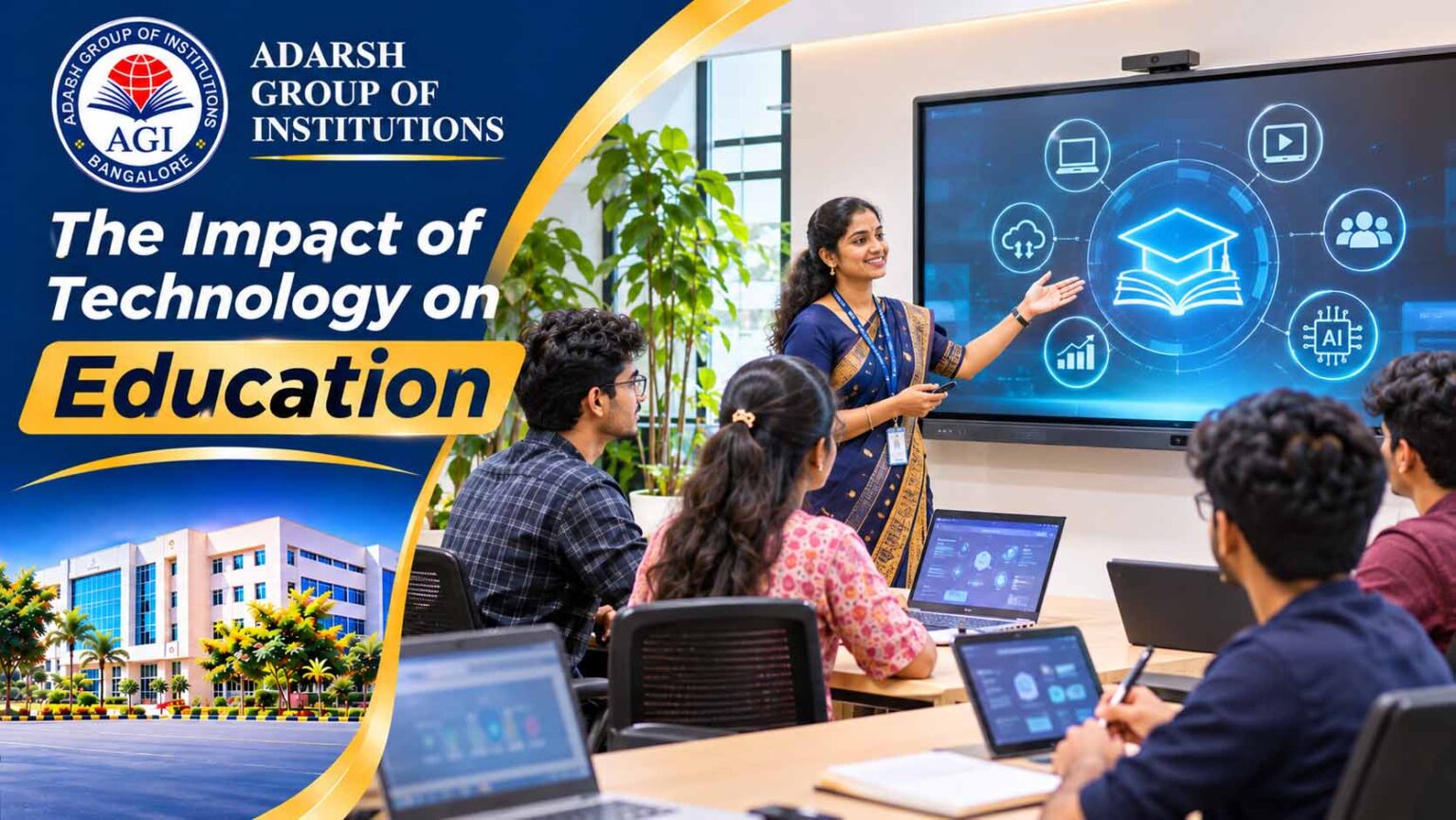
Technology has transformed many aspects of everyday life, and education is no exception. Traditional classroom teaching is increasingly supported by digital tools, online learning platforms, interactive resources and modern educational technologies.
Students can now access information, attend virtual classes, collaborate on projects and explore educational subjects through various digital platforms. Teachers can also use technology to make lessons more interactive and present complex concepts in different ways.
As educational institutions continue to adopt digital solutions, technology is becoming an important part of the modern learning experience.
One of the most important impacts of technology on education is improved access to learning resources.
Students can access educational materials through computers, smartphones and tablets. Online learning platforms, digital libraries and educational websites provide additional opportunities to explore subjects beyond classroom textbooks.
Students can also access recorded lessons, tutorials and reference materials whenever they need them.
This flexibility allows learners to revise topics and study at their own pace.
Technology makes it possible to introduce interactive teaching methods into classrooms.
Teachers can use videos, animations, presentations, simulations and educational applications to explain concepts.
For example, science students can explore virtual experiments, while geography students can use digital maps to understand different locations.
Interactive resources can make lessons more engaging and encourage students to participate actively.
Artificial intelligence is creating new possibilities for teaching and learning.
AI-powered educational tools can assist students with explanations, language learning, practice questions, research organisation and personalised study support.
Teachers may also use digital tools to prepare learning materials and organise certain academic activities.
However, AI should support learning rather than replace independent thinking.
Students must verify information, understand the concepts they study and follow academic integrity guidelines when using AI tools.
Technology provides teachers with additional ways to plan and deliver lessons.
Digital presentations, educational videos, online assessments and interactive applications can support classroom instruction.
Teachers can also use digital platforms to share resources and provide feedback.
When used effectively, technology can complement traditional teaching methods and help educators address different learning needs.
As technology becomes increasingly important in professional environments, digital literacy is an essential part of education.
Students can develop skills such as:
Computer literacy.
Internet research.
Digital communication.
Presentation preparation.
Spreadsheet management.
Online collaboration.
Responsible use of artificial intelligence.
Cybersecurity awareness.
These abilities can support students in higher education and future professional environments.
Digital technology allows students to work together even when they are not physically present in the same classroom.
Online documents, video conferencing and collaboration platforms help students share ideas, prepare presentations and complete group assignments.
Students can also participate in virtual discussions and connect with educational communities.
Such experiences encourage teamwork, communication and adaptability.
Technology has significantly influenced modern education by improving access to information, supporting interactive teaching and creating flexible learning opportunities.
From smart classrooms and online education to artificial intelligence and digital collaboration, technology offers several ways to enhance the educational experience.
At the same time, responsible use, equal access and effective guidance remain essential.
Educational institutions, teachers and students should work together to use technology meaningfully and create learning environments that support knowledge, creativity and overall development.
Technology improves access to learning resources, supports interactive teaching, encourages independent learning and develops digital skills.
It provides access to digital resources, educational videos, online courses, interactive applications and collaborative learning platforms.
Some advantages include flexible learning, improved communication, access to information, interactive lessons and opportunities to develop digital literacy.
Challenges include digital distractions, unequal access to devices, cybersecurity risks and excessive dependence on technology.
AI tools can support personalised learning, provide explanations, generate practice questions and assist with educational activities.
Technology is more likely to complement traditional teaching by providing additional learning resources and interactive experiences. Teachers continue to play an important role in guiding students.
A positive educational environment can encourage students to explore their interests, participate in activities and develop skills beyond academics. Visit Adarsh Group of Institutions to explore its educational programmes and learning opportunities.
PUC Commerce, B.Com and M.Com programmes for working students.
