
A Jain Institution -Managed by Adarsh Vidya Sangh
Menu

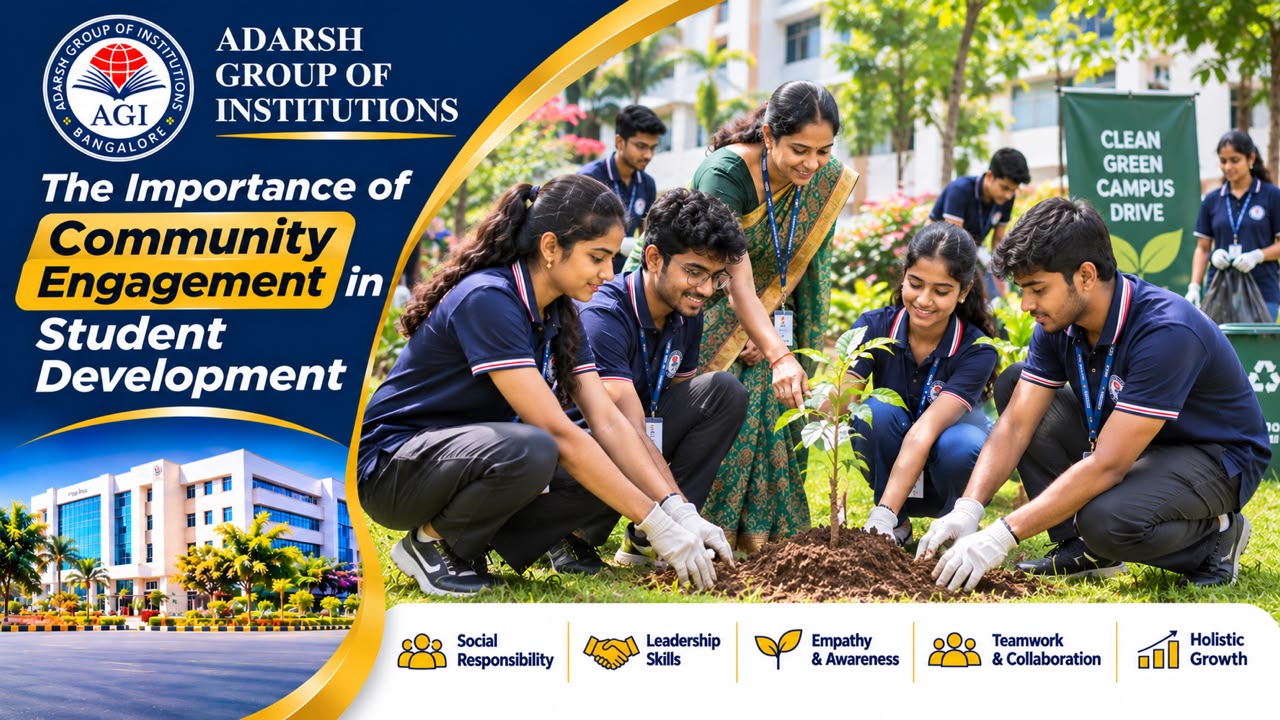
Education is not limited to classrooms, textbooks and examinations. Students also learn important life lessons through their interactions with people and the communities around them.
Community engagement gives students opportunities to participate in activities that address local needs, promote awareness and encourage positive social contributions. Through volunteering, awareness programmes, environmental initiatives and community projects, students can develop skills and values that support their overall growth.
Community engagement helps students understand that they can contribute positively to society.
Activities such as cleanliness drives, environmental awareness programmes, educational campaigns and volunteering introduce students to different community needs.
By participating in such initiatives, students learn the importance of responsibility, cooperation and contributing to the common good.
Interacting with people from different backgrounds allows students to understand different experiences and perspectives.
Community activities can help them recognise social challenges and become more considerate towards the needs of others.
Developing empathy encourages students to listen, respect differences and respond thoughtfully to situations around them.
Many community initiatives require students to plan activities, divide responsibilities and work towards shared goals.
These experiences provide opportunities to practise leadership, coordination, communication and teamwork.
Students can learn how to organise tasks, support their peers and contribute to group decisions.
Academic knowledge becomes more meaningful when students understand how it relates to real-life situations.
For example, environmental lessons can be connected with tree-planting and cleanliness initiatives. Communication skills can be practised through awareness campaigns, while research skills can support community surveys.
Such activities help students see how education can be applied to address practical challenges.
Environmental responsibility is an important part of community development.
Students can participate in activities such as waste segregation awareness, campus cleanliness campaigns, water conservation initiatives and tree-planting programmes.
These activities encourage students to understand environmental concerns and adopt more responsible habits in their daily lives.
Community engagement often involves interacting with different individuals and groups.
Students may need to explain ideas, organise activities, give presentations or communicate information to the public.
These experiences can improve their confidence, listening skills and ability to communicate clearly in different situations.
Participating in community initiatives helps students feel connected to the people and places around them.
Working towards shared goals can create meaningful relationships among students, teachers and community members.
A sense of belonging can also encourage students to take greater interest in contributing to their surroundings.
Educational institutions can support community engagement by providing students with opportunities to participate in volunteering, awareness programmes, outreach activities and social initiatives.
Teachers can guide students in selecting meaningful activities, understanding community needs and reflecting on what they learn from their experiences.
Such opportunities help make education more connected to social development.
Community engagement is an important part of holistic student development. It encourages social responsibility, empathy, leadership, teamwork and communication while helping students understand the needs of their communities.
By participating in meaningful community activities, students can apply their learning beyond the classroom and develop a stronger sense of responsibility towards society.
.
A positive educational environment can encourage students to explore their interests, participate in activities and develop skills beyond academics. Visit Adarsh Group of Institutions to explore its educational programmes and learning opportunities.
PUC Commerce, B.Com and M.Com programmes for working students.
