
Menu
Adarsh PU College. Best PU College in South Bangalore

A JAIN INSTITUTION
SITADEVI RATANCHAND NAHAR
ADARSH PU COLLEGE
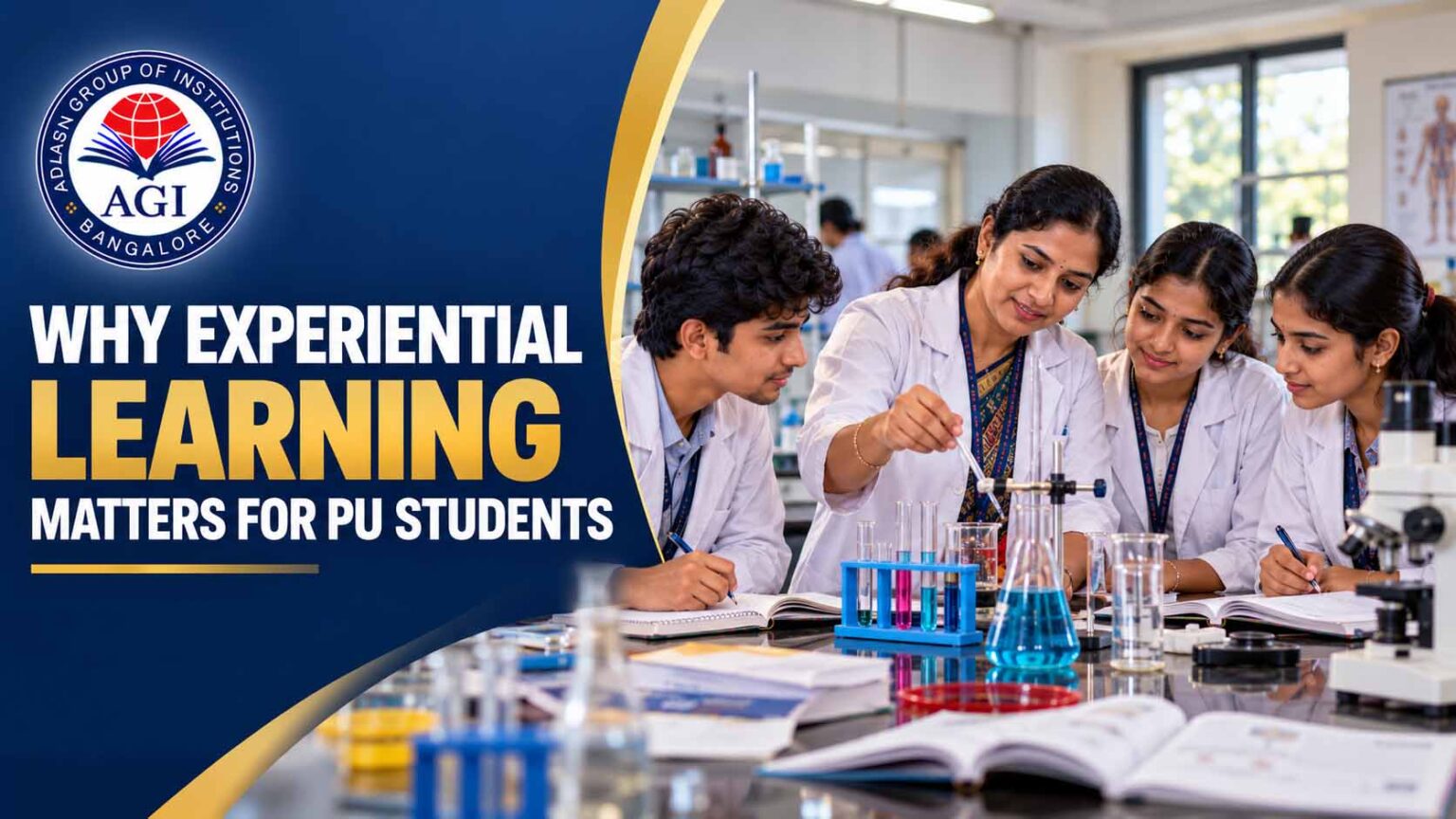
Education becomes more meaningful when students can connect classroom concepts with real-world experiences. Experiential learning for PU students encourages active participation through experiments, projects, presentations, group activities and practical demonstrations.
Instead of relying entirely on memorisation, students get opportunities to explore concepts, ask questions and apply what they learn. This approach can make learning more engaging while helping students develop academic knowledge, confidence and essential life skills.
Experiential learning is an approach in which students learn through participation, practical activities and reflection. It allows them to explore concepts by doing tasks, observing results and discussing what they discover.
For PU students, these experiences may include science experiments, mathematics activities, commerce-based case studies, classroom presentations, educational visits and collaborative projects.
When students connect theory with practice, they may find it easier to understand complex topics and remember important concepts.
Helps students apply theoretical concepts in real situations.
Encourages students to analyse, explore and solve problems.
Improves teamwork, presentation and interpersonal skills.
Builds self-confidence and independent learning habits.
Experiential learning encourages students to think independently rather than simply memorising answers. When students participate in projects or experiments, they may need to identify a problem, analyse information and consider different solutions.
Teachers can encourage this process by asking questions, inviting students to explain their reasoning and allowing them to discuss alternative approaches.
Developing these skills during PU education can help students prepare for more demanding academic tasks in higher education.
Classroom lessons provide the foundation for understanding different subjects. Practical activities help students see how these concepts work in real situations.
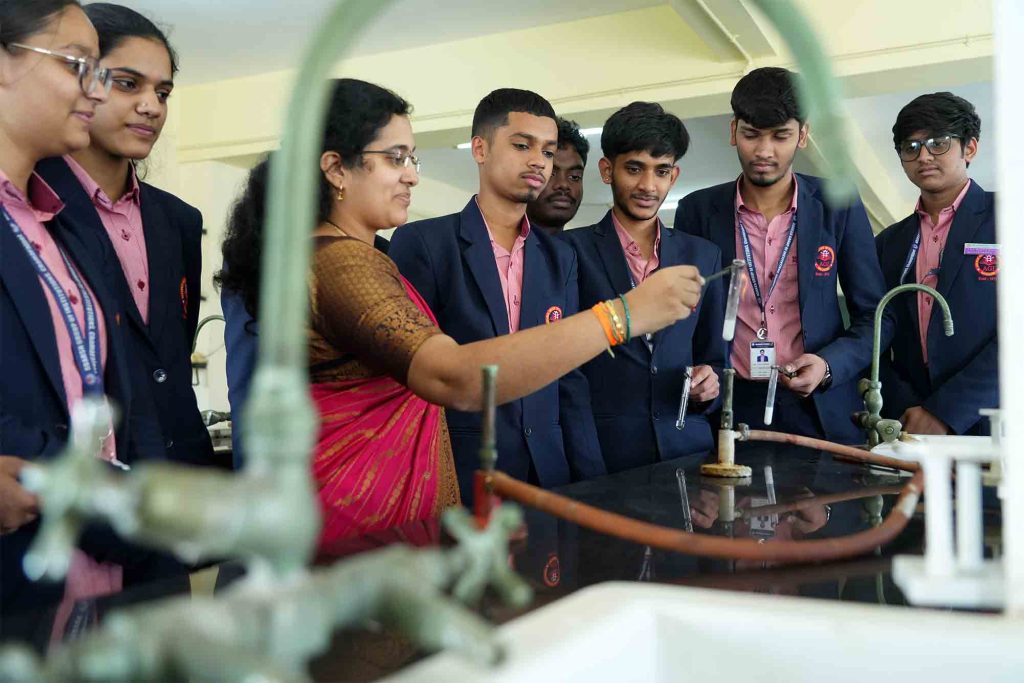
For example, science students can explore scientific principles through laboratory experiments. Commerce students can practise basic accounting, budgeting and business calculations through classroom exercises. Mathematics students can apply numerical concepts to everyday situations.
These activities help students develop a deeper understanding of their subjects and recognise the practical value of academic knowledge.
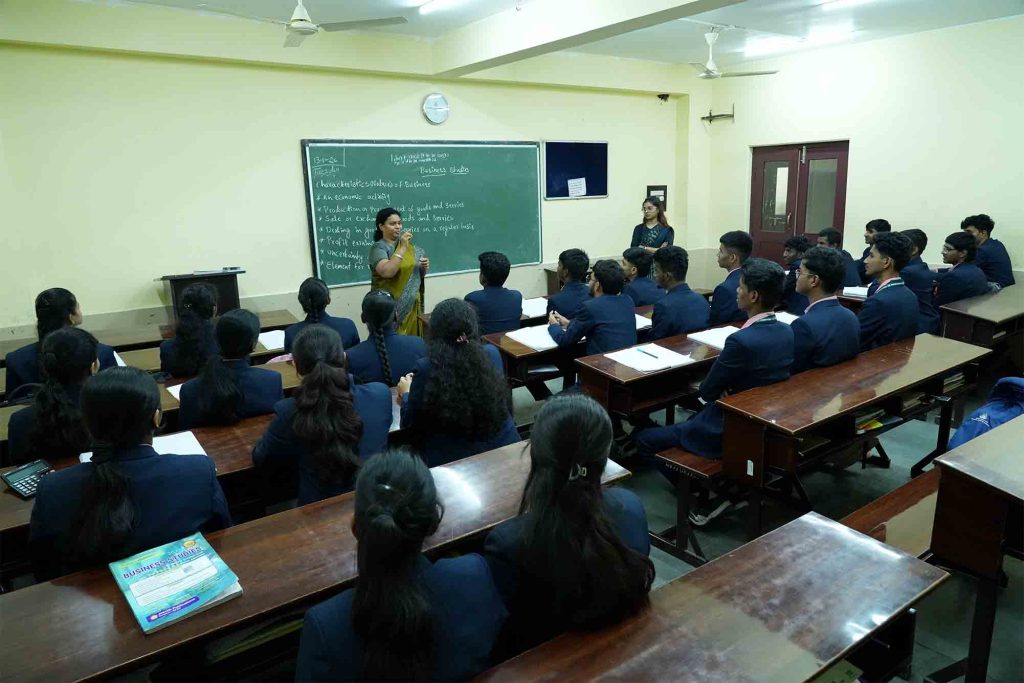
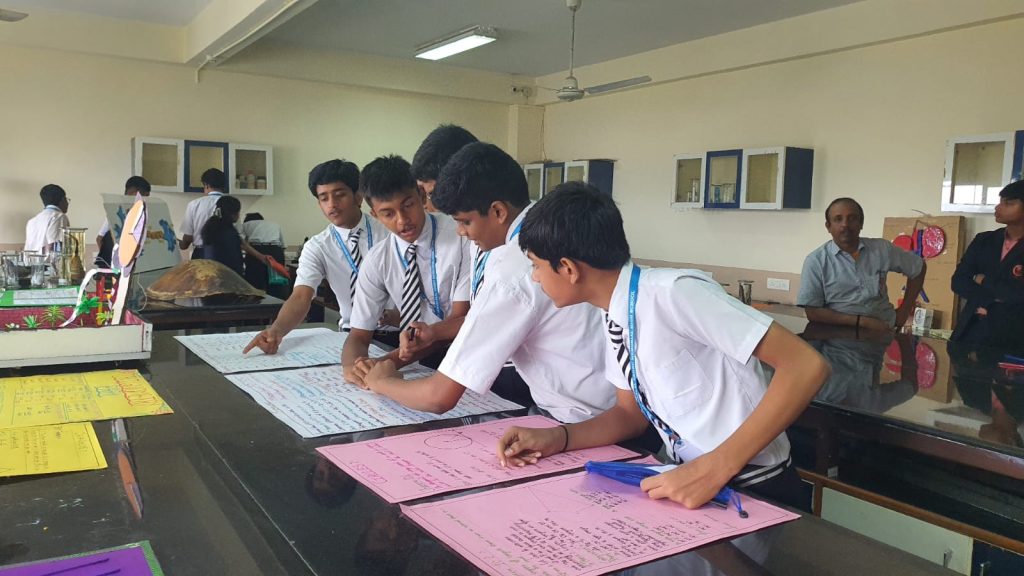
Group assignments, classroom discussions and presentations give students opportunities to express ideas and collaborate with others.
Through these activities, students can practise explaining concepts, listening to different viewpoints, sharing responsibilities and working towards common goals.
These experiences can also help students become more comfortable speaking in front of others, presenting their work and participating in academic discussions.
Participating in practical activities gives students opportunities to make decisions, test ideas and learn from mistakes.
For instance, preparing a classroom presentation requires students to research information, organise their thoughts and explain their findings clearly. Completing a group project encourages them to take responsibility for specific tasks.
With guidance and regular practice, these experiences can help students become more confident, organised and independent learners.
Traditional classroom instruction remains important, but combining it with interactive activities can make lessons more interesting.
Teachers can use demonstrations, quizzes, experiments, discussions, role-playing activities and project-based assignments to encourage participation.
Different activities can also give students multiple ways to understand a topic. This can help them remain engaged and recognise which learning methods work best for them.
Experiential learning gives students opportunities to explore questions and develop their own ideas.
Science students may investigate how a scientific principle works, while commerce students may create a simple business plan or analyse a hypothetical business situation. Students from different streams can also participate in presentations, exhibitions and creative projects.
These experiences encourage curiosity and provide opportunities to explore subjects beyond textbooks.
Experiential learning for PU students creates opportunities to connect academic knowledge with practical experiences. Through experiments, projects, discussions and collaborative activities, students can develop critical thinking, communication, creativity and problem-solving skills.
These experiences can make learning more engaging and help students prepare for the demands of higher education. By combining classroom instruction with meaningful practical activities, students can build a stronger foundation for their academic journey and future goals.
Choosing the right PU college is an important step in a student’s academic journey. A supportive learning environment can help students build subject knowledge, explore their interests and prepare for future educational opportunities.
Prospective students and parents can contact the college to confirm current course options, facilities, academic activities and admission requirements.
Explore SRN Adarsh PU College to learn more about its available programmes and admission information.