

Menu


SRN ADARSH COLLEGE · STUDY GUIDANCE
How to Build a Professional Portfolio During Your Degree
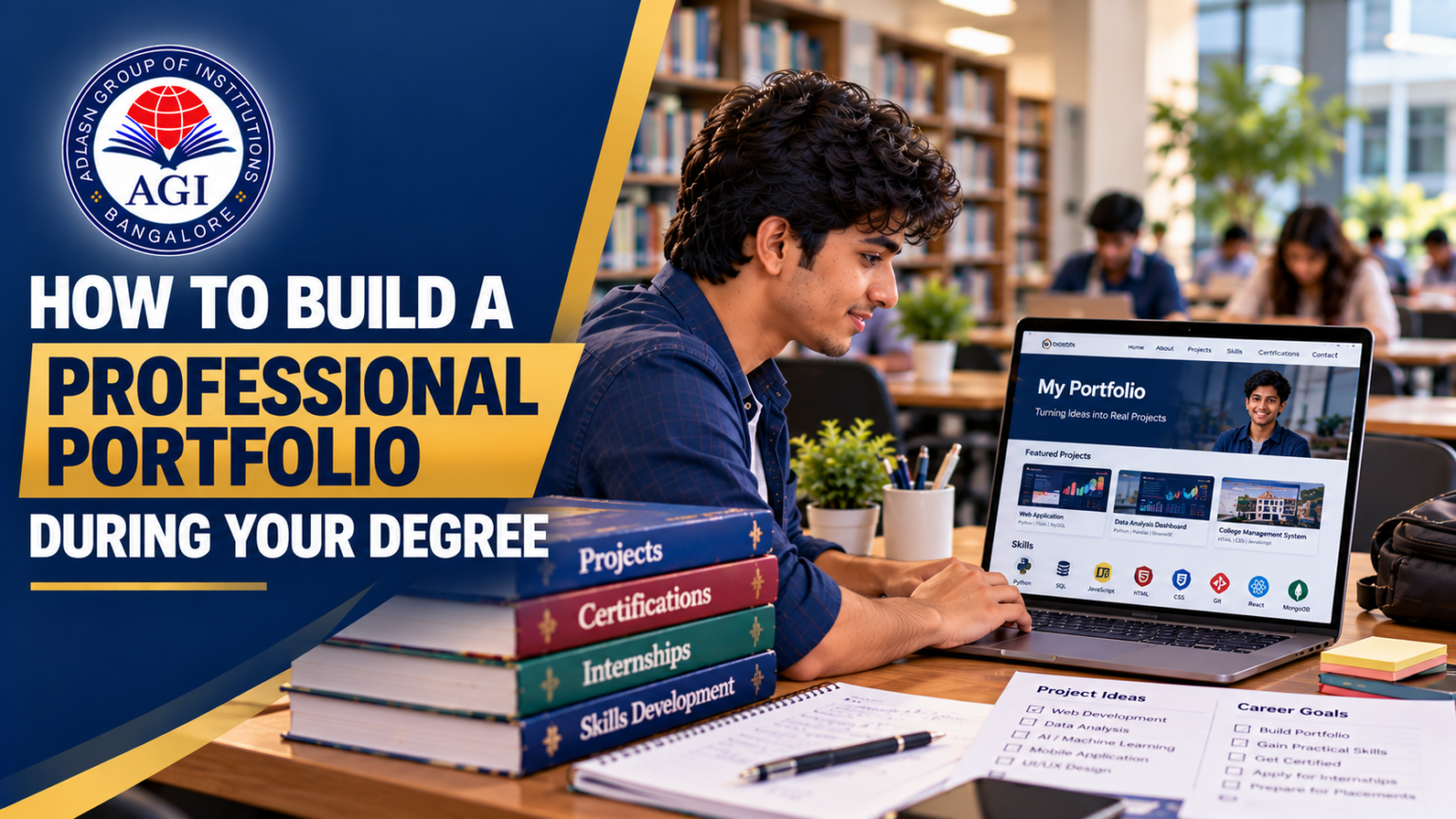
Building a professional portfolio during your degree is an effective way to showcase your skills, academic projects, certifications and achievements. While a resume provides a brief overview of your qualifications, a portfolio offers examples of what you have learned and accomplished.
For college students, creating a portfolio early can help demonstrate practical knowledge, track personal growth and prepare for internships, job opportunities and higher education. You do not need years of work experience to get started. Your coursework, college projects and extracurricular activities can all become valuable portfolio material.
What is a Professional Portfolio ?
A professional portfolio is a collection of your work, skills, achievements and learning experiences. It provides evidence of your abilities and helps others understand your interests, strengths and potential.
Depending on your degree and career goals, your portfolio could include academic assignments, software projects, business case studies, research work, presentations, design samples or writing examples.
You can create a digital portfolio using a personal website, an online portfolio platform or a well-organised document. Choose a format that suits your field and makes your work easy to explore.
Showcase Academic Projects
Showcases Your Skills
Highlights your practical knowledge and learning outcomes.
Supports Career Growth
Helps you stand out in placements and higher education applications.
Builds Confidence
Gives you a sense of accomplishment and clarity about your goals.
Reflects Your Personality
Displays your achievements, interests and commitment to continuous learning.
Projects can demonstrate how you apply knowledge and solve problems. Describe relevant assignments, software projects, research work or presentations.
For each project, briefly explain its purpose, the tools or methods you used and your individual contribution. Focus on what you learned and accomplished.
What is a Professional Portfolio ?
A professional portfolio is a collection of your work, skills, achievements and learning experiences. It provides evidence of your abilities and helps others understand your interests, strengths and potential.
Depending on your degree and career goals, your portfolio could include academic assignments, software projects, business case studies, research work, presentations, design samples or writing examples.
You can create a digital portfolio using a personal website, an online portfolio platform or a well-organised document. Choose a format that suits your field and makes your work easy to explore.
Start with Your Best Academic Projects
Academic projects are an excellent starting point for building a portfolio. They demonstrate how you apply classroom knowledge to practical tasks.
Select projects that reflect your interests and abilities. For each project, explain its purpose, the problem you addressed, the tools or methods you used, your contribution and the final outcome.
For example, a computer applications student might showcase a website, database application or data analysis dashboard. A commerce student could include a financial analysis, business plan or marketing case study.
Tip: Focus on quality rather than quantity. A few well-explained projects can be more valuable than a long list of unfinished work.
Include Relevant Certifications and Courses
Certifications and additional courses can demonstrate your willingness to learn beyond the regular syllabus.
Include relevant workshops, online courses, technical certifications and training programmes you have completed. Mention the course provider, completion date and skills gained where appropriate.
Choose learning opportunities that align with your academic interests or intended career. For instance, students interested in data analytics might explore spreadsheets, SQL, Python or data visualisation, while students interested in business may benefit from courses in communication, accounting or digital marketing.
Always include genuine qualifications and accurately represent your level of knowledge.
Highlight Your Technical and Soft Skills
A strong portfolio should communicate both what you can do and how you work.
Depending on your career goals, you may include technical skills such as programming, database management, graphic design, data analysis or digital tools.
Soft skills can also be demonstrated through examples of teamwork, communication, leadership, organisation and problem-solving.
Rather than simply listing these abilities, provide evidence. A group project can illustrate collaboration, a presentation can demonstrate communication, and a completed technical project can show practical problem-solving.
Add Internships, Volunteering and Extracurricular Activities
Professional experience does not always begin with a full-time job. Internships, volunteering, student clubs, college events and competitions can provide meaningful examples of your abilities.
Include relevant experiences and explain your responsibilities, contributions and learning outcomes. If you helped organise a college event, for example, describe your role in planning, coordination or communication.
If you have not completed an internship yet, do not worry. Personal projects, academic assignments and participation in student activities can help you build an initial portfolio while you look for suitable opportunities.
Create a Clean and Professional Digital Portfolio
Building a professional portfolio during your degree encourages you to reflect on your learning and identify areas for improvement.
It can help you prepare for internship applications, placement interviews, freelance opportunities and further education. It can also provide useful examples when explaining your experience during an interview.
A portfolio does not guarantee selection for a job or internship, but it can help you present relevant evidence of your abilities and demonstrate your commitment to continuous learning.
Common Portfolio Mistakes to Avoid
Avoid these common mistakes when creating your portfolio:
- Including unfinished projects without explaining their status.
- Listing skills without providing evidence of your abilities.
- Adding irrelevant or repetitive content.
- Using an inconsistent design or difficult-to-read formatting.
- Sharing broken links or inaccessible files.
- Exaggerating achievements or claiming work completed by others.
- Forgetting to update contact details and recent accomplishments.
A clear, honest and well-organised portfolio creates a stronger impression than one filled with unnecessary information.
How a Portfolio Can Support Your Career Goals
A digital portfolio makes it convenient to share your work with recruiters, internship coordinators, mentors and academic institutions.
You can build one using a personal website, a portfolio platform or a well-organised online document. Keep the design simple, readable and consistent.
Consider including these sections:
- About Me: A short introduction to your academic background and career interests.
- Projects: Selected work with descriptions, images or demonstrations.
- Skills: Relevant technical and professional abilities.
- Certifications: Completed courses and training.
- Experience: Internships, volunteering and leadership activities.
- Contact Information: A professional email address and relevant profile links.
Make sure that shared links work correctly and that visitors can access the material you intend to showcase.
A strong resume does not depend entirely on previous employment. By presenting education, projects, relevant skills and achievements clearly, college students can demonstrate their potential and prepare for internships and entry-level opportunities.
Explore Undergraduate Education at SRN Adarsh College
Your degree years offer valuable opportunities to explore interests, develop practical skills and prepare for future career possibilities. Participating in academic projects, workshops, competitions and collaborative activities can help you collect meaningful experiences for your professional portfolio.
At SRN Adarsh Degree College, students and prospective applicants can explore the available academic programmes and learning opportunities to understand how they align with their educational goals.
Visit the SRN Adarsh Degree College website to learn more about the college and its programmes.
Conclusion
Learning how to build a professional portfolio during your degree can help you showcase your academic progress, practical abilities and personal achievements. By including relevant projects, certifications, skills and experiences, you can create a useful record of your development.
Start with the work you already have, explain your contributions clearly and improve your portfolio as you gain new experience. With regular updates and thoughtful presentation, your portfolio can become a valuable resource as you prepare for internships, placements and higher education.